Application guide

UHT Machine for Milk Processing

A UHT machine for milk processing must balance commercial sterility, flavor impact, protein stability, homogenization, cleaning, and aseptic filling integration.

Confirm that the complete milk process can meet the product-quality, scheduled-process, homogenization, cleaning, sterile-transfer, and package targets.

Last updated .

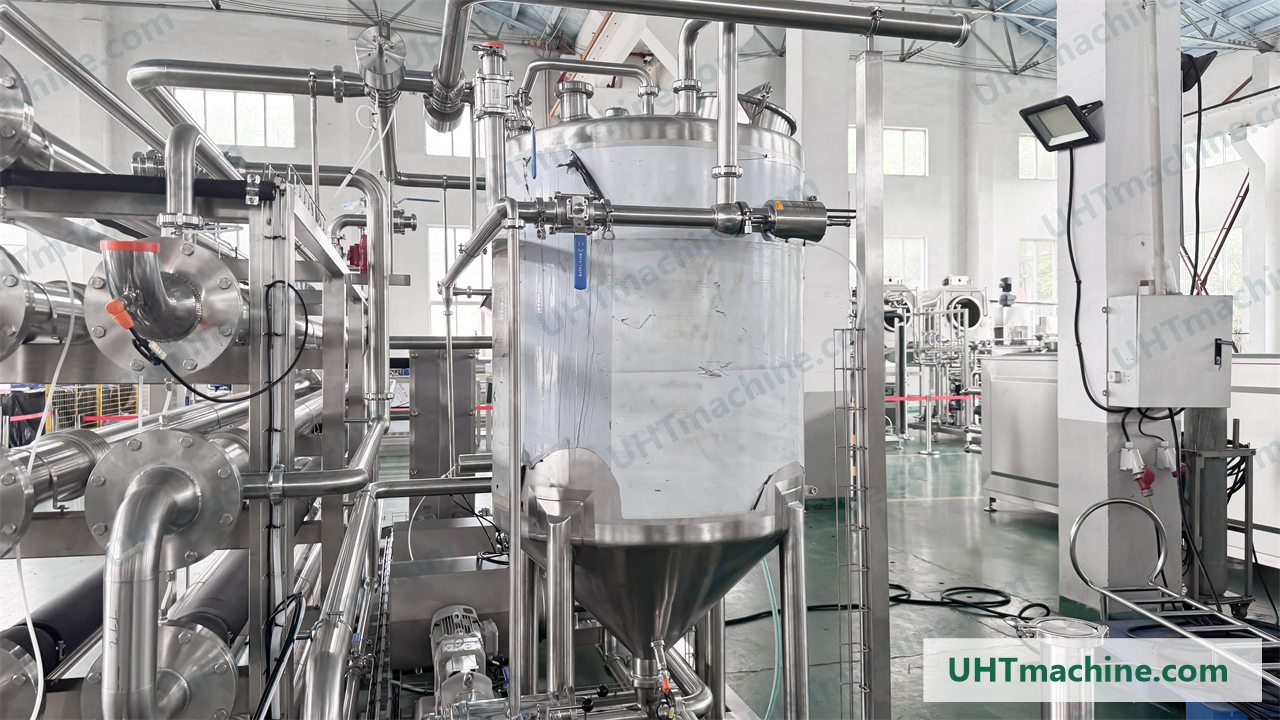
Stainless steel liquid-processing equipment reference image
Equipment reference image for planning discussion; verify the final model, specification, and delivered scope with the supplier.

Technical overview

Can the complete milk process meet the product and package target?

Milk process factors

Milk UHT projects usually review raw material quality, fat level, homogenization, heat stability, target shelf life, filling format, sterilization temperature, holding condition, and whether direct or indirect heating is preferred.

Line integration

The UHT section should be planned with upstream balance tanks, filtration or standardization if needed, homogenizer interface, cooling, aseptic tank, and filling machine requirements so the line runs as a system.

Quotation details

A useful inquiry includes milk type, target L/h, package format, expected shelf life, utility conditions, automation level, CIP expectations, installation country, and whether project references are needed.

Process integration

Define the complete milk UHT line, not only the heater

Product quality and commercial sterility depend on the scheduled process, equipment sequence, sterile boundary, packaging system, and validated operation as one line.

Product basisState milk composition, added ingredients, stabilization, homogenization needs, heat stability, target package, shelf-life objective, and market requirements.
Heating choiceCompare direct and indirect heating using product heat load, flavor target, steam quality, vacuum and cooling needs, fouling, heat recovery, and operating cost.
HomogenizationFreeze upstream or aseptic downstream position, pressure stages, temperature condition, controls, bypass, and responsibility for sterile integration.
Sterile boundaryDefine startup sterilization, diversion, sterile-water circulation, aseptic tank or filler connection, pressure control, shutdown, and product recovery.
ValidationAssign the process authority, scheduled-process approval, instrument calibration, incubation or release testing, packaging validation, and change-control responsibilities.

Inquiry checklist

Milk process and packaging inputs

Buyer questions

Milk UHT questions to resolve before quotation

What UHT machine is used for milk?

Milk can use tubular, plate, or project-specific UHT configurations depending on capacity, heat sensitivity, homogenization, cleaning, and filling requirements.

Does milk UHT need a homogenizer?

Many dairy beverage lines include homogenization, but the exact position and specification depend on formula, fat level, process target, and package format.

Can the system connect to aseptic filling?

A supplier may propose an aseptic tank or filler interface, but the complete sterile boundary, flow and pressure range, sterilization sequence, controls, failure states, and validation responsibilities must be documented before acceptance.

What affects milk UHT machine price?

Capacity, heating method, homogenizer interface, material, control level, CIP, aseptic filling connection, FAT, and commissioning scope affect price.