Upstream boundary
Freeze product preparation, stable inlet conditions, mixing, filtration, deaeration, homogenization, feed temperature, pressure, and which equipment is supplied by others.
Line integration guide
A complete UHT line is a coordinated product, control, cleaning, and sterile-transfer system—not a sterilizer connected to a filler by pipe.
Define scope boundaries, validated sterile zones, failure states, and the owner of each interface before commercial acceptance.
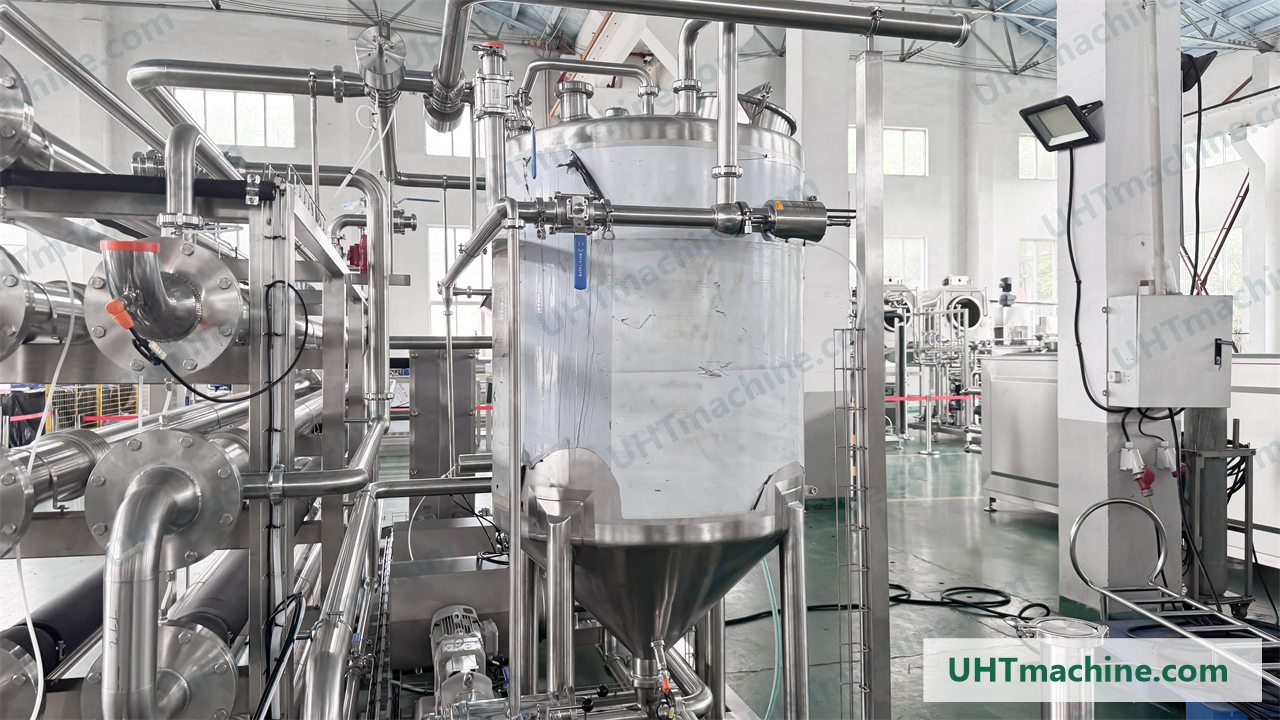
Technical overview
Freeze product preparation, stable inlet conditions, mixing, filtration, deaeration, homogenization, feed temperature, pressure, and which equipment is supplied by others.
Define product envelope, guaranteed flow basis, heat route, holding section, cooling, diversion, records, turndown, losses, and the limits used for acceptance.
Mark valves, piping, aseptic buffer, filler, package sterilization, sterile utilities, control handshakes, cleaning, recovery, and every excluded system.
UHT process flow map
This is a planning flow, not a validated process. Homogenization and aseptic buffering are optional positions whose final location and sterile responsibility depend on the product and package.
Stable feed duty and responsibility for preparation equipment.
Regeneration, heating, holding, diversion, cooling, and records.
Buffer or filler balance, sterile connections, and control handshakes.
Mix, standardize, filter, deaerate, or otherwise condition the product to an agreed stable inlet duty.
Define regeneration, utility balance, pressure control, product recovery, and startup conditions.
Freeze upstream or aseptic downstream position, operating envelope, controls, bypass, and responsibility.
Control the selected heating route, verified flow, holding section, critical instruments, diversion, and records.
Maintain the validated sterile and pressure boundary through cooling, valves, piping, and sampling points.
Balance output with aseptic tank or filler demand, package changes, planned stops, alarms, recovery, and final acceptance.
Interface control
A responsibility matrix prevents suppliers from leaving equipment, piping, controls, sterile preparation, utilities, documentation, or performance gaps between their scopes.
| Product interface | Agree flow range, pressure, temperature, back-pressure control, product recovery, buffer volume, filler demand, package size, start-stop behavior, and turndown. |
|---|---|
| Sterile boundary | Mark every sterile valve and connection, sterilization medium, condensate path, sterile-water route, aseptic tank, vent filter, and sampling point. |
| Control handshake | Document permissives, ready and run signals, diversion, filler stop, aseptic alarm, emergency stop, restart sequence, data exchange, and event ownership. |
| CIP and SIP | Assign circuits, return path, chemical exposure, sterile sequence, valve states, utilities, verification records, and cleaning responsibility at the interface. |
| Line balance | Calculate saleable output from filler rate, package, schedule, planned and unplanned stops, cleaning time, startup and shutdown losses, buffer strategy, and expansion margin. |
| Delivery scope | Assign equipment, piping, valves, controls, utilities, foundations, installation, supervision, FAT, shipping, commissioning, validation support, training, spares, and documentation. |
| Acceptance | Use one integrated FAT or site test matrix covering communication, sterile sequence, flow balance, deviations, alarm recovery, packaging conditions, records, open-item closure, and final signoff. |
Inquiry checklist
Buyer questions
The scope may include product preparation, feed and balance equipment, heat treatment, holding, cooling, homogenization, aseptic buffering, filling, utilities, controls, and CIP or SIP, but every included and excluded item must be listed in the quotation.
No. The decision depends on filler demand, line balance, package changes, planned stops, cleaning sequence, buffer strategy, and the validated sterile design.
It may be possible when flow, pressure, temperature, sterile boundaries, controls, diversion, shutdown, and recovery behavior are engineered and validated as one interface.
Use saleable output, package size, filler speed, operating schedule, planned and unplanned stops, cleaning time, product losses, turndown, and buffer strategy—not nominal machine rates alone.
The contract should assign responsibility for the process, sterile zones, controls, package system, tests, records, deviations, and final acceptance; responsibility should never be inferred from equipment proximity.