Why CIP matters for UHT lines
UHT systems operate with heat, protein, sugar, minerals, viscosity, and sometimes particles. These factors can create residue or fouling, so cleaning must be considered before equipment selection is finalized.
Hygienic design guide
CIP cleaning is one of the most important practical issues in UHT sterilizer operation. The cleaning design should match product residue, fouling behavior, sanitary layout, and plant routines.
Confirm that the circuit boundaries, flow, temperature, time, chemistry, drainability, instruments, and acceptance criteria fit the product residue and full line.
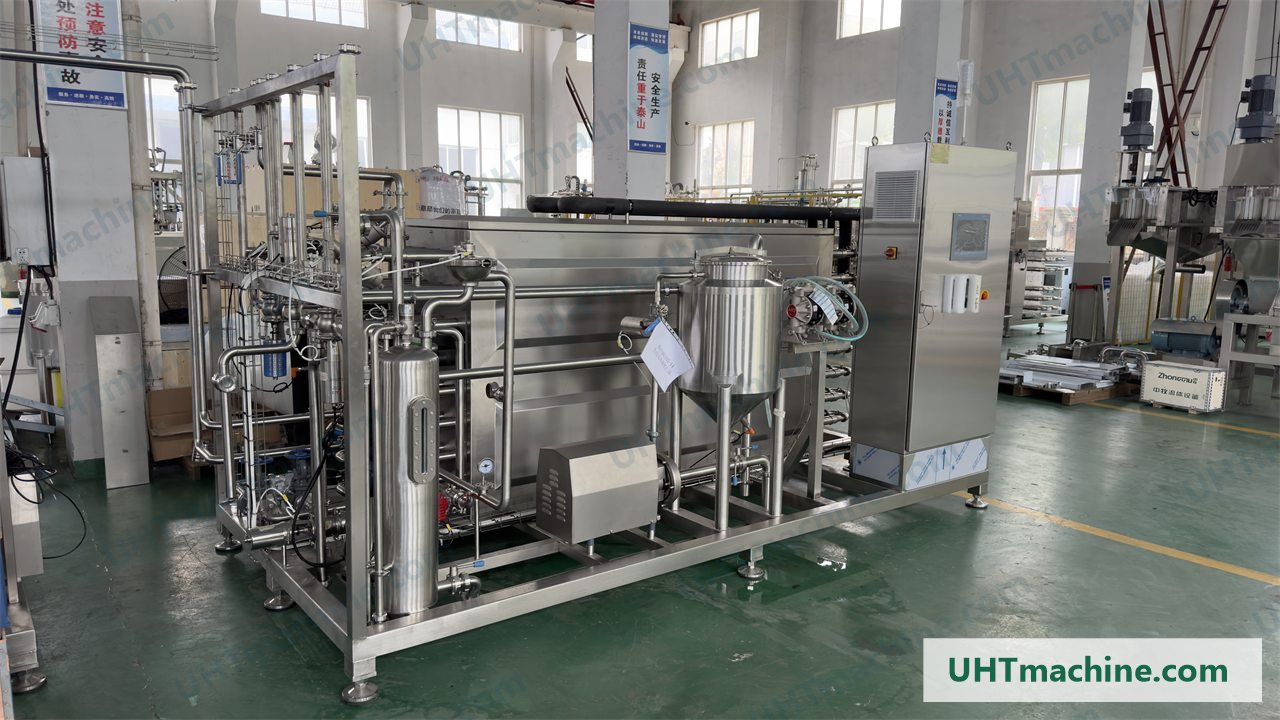
Technical overview
UHT systems operate with heat, protein, sugar, minerals, viscosity, and sometimes particles. These factors can create residue or fouling, so cleaning must be considered before equipment selection is finalized.
Buyers should discuss cleaning flow, temperature program, chemicals, return path, valve arrangement, dead-leg control, tank availability, automation sequence, and how operators verify cleaning completion.
Milk, plant-based drinks, juice, sauces, puree, syrup, and liquid egg can create different cleaning loads. Viscosity, protein, pulp, sugar, and minerals should be shared during inquiry review.
Cleaning acceptance
The quotation should define circuits, operating criteria, sequence logic, verification, and responsibility across every connected item.
| Circuit map | Identify each tank, pump, heat exchanger, holding tube, valve path, aseptic buffer, filler interface, return route, dead leg, and excluded branch. |
|---|---|
| Cycle definition | Specify pre-rinse, chemical steps, temperatures, concentrations, flow or velocity criteria, contact times, intermediate rinses, final rinse, and sterile-water steps. |
| Instrumentation | List conductivity, temperature, flow, level, pressure, return-quality, valve-position, alarm, trend, recipe, and calibration requirements. |
| Release criteria | Define rinse endpoint, inspection or sampling method, deviation handling, re-clean decision, records, operator signoff, and validation ownership. |
| Product change | Require reassessment when formula, allergen, viscosity, particles, run length, chemical, utility quality, equipment, or packaging interface changes. |
Inquiry checklist
Buyer questions
A supplier may include CIP, but the proposal should define circuits, product residue basis, target flow, time, temperature, chemicals, return path, instruments, interlocks, acceptance criteria, and excluded equipment.
Protein-heavy, sugar-heavy, viscous, pulpy, or particle-containing formulas may require more careful cleaning design and operating procedures.
It can be automated depending on project scope, PLC configuration, valve group, tank system, and the buyer's plant cleaning requirements.
Share product residue behavior, cleaning chemicals, available utilities, cleaning time window, automation preference, and whether the plant already has a central CIP system.